Brian makes a list of the top 10 mistakes new designers make from the perspective of a publisher and we all debate about it. This covers things like the design decisions that will make a game harder to sell. Jeremy will share his list from a designer perspective in the next episode!
Finding the right name for your product, company, book or band is extremely important. After all, you’ll be pouring a lot of time and money into making it as immensely successful as it is in your imagination. So if I’ve just designed a game or started a YouTube channel, what should I name it? This question is fresh in my mind because I realized that our podcast name, The Forbidden Limb, isn’t effective, for a variety of reasons. The main reasons are:
It’s hard to spell. Most people fail to spell “forbidden” correctly on the first try. If someone hears it verbally from their friend, they might Google it as “forbiden lim” or something else that won’t get them to us.
It doesn’t describe our content. We discuss the business side of the board-game industry. Nothing that suggests or implies board games or the business is in that name. When we pop up on The Dice Tower feed, some people who would be interested in our content don’t click on the link because they don’t have a clue about what we’re about. At the same time, many who have no interest in us might click on it, start watching it, and be extremely bored.
It’s hard to remember. “The Forbidden Limb” is a made-up phrase that no one has probably ever used before us, so it doesn’t spring to mind when someone is trying to recall the name of their new favorite podcast. If we were the “Two Birds with One Stone” podcast, even though it has nothing to do with our content, people will have a better chance remembering it because they’ve all used the phrase “kill two birds with one stone.”
Why did we choose it in the first place? I started using it a few years ago when I was making YouTube videos on board-game strategy. At the time, I knew nothing about branding. I used it because I thought it sounded unique. It made me imagine what a forbidden limb might look like, or why one might exist. Since I built a small following with it, I thought it would be nice to keep using it and convert some of those “fans” to the new show as an initial foundation. I’m still happy with that decision, but now it’s time to go with something more appropriate. So, ladies and gentlemen, our new name is…. Board Game Business Podcast!
Beyond the podcast, we go through this every time we design or publish a new product at Overworld Games. Once we choose the theme, we need to name it something that is both marketable and appropriate for the feel of the game and our existing product line. For us, having a name that appeals to large retailers is part of our long-term business strategy, so we also consider that before choosing. In our podcast episode on this topic, Jeremy suggested that you ensure that your name makes sense in other languages if you hope to enter into partnerships with international publishers.
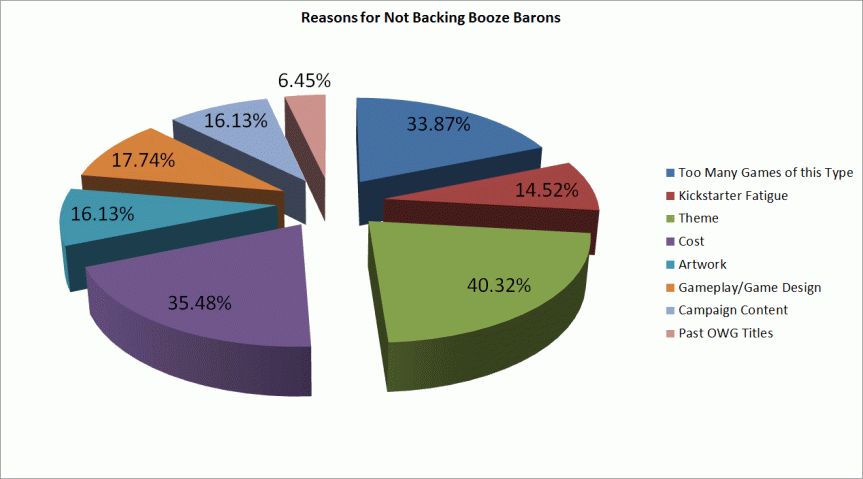
We are slightly regretting naming our US Prohibition game “Booze Barons”, because I’m not sure whether a store like Target would carry a product with a slang term for alcohol in the title. During our Kickstarter campaign for it, we asked our previous campaign backers for reasons why they may not back Booze Barons, and a surprising number of them said they didn’t want to play or support an alcohol-related product. You can see in the chart that over 40% stated the theme as one of the reasons they did not intend to back us.
It’s also important to ensure that the name you choose is not already used by other products or companies in your industry. If it is, you may confuse your customers or get into legal trouble. If someone else has your name trademarked, you need to keep looking for another name. A fantastic way to see if your name is already taken is by going to KnowEm.com. You can use other sites, but I like this one because it checks social media and domain availability as well.
In the end, a name is important, but don’t let it stop you from creating something. When you’re first playing around with an idea, just name it anything and keep moving. Once you know your creation will be sticking around, you can spend more time finding the perfect name. If you chose the wrong one, like we did, it will become clear before long. Then you can change it to something better.
What are some other features of a game’s name that are important to you?
What’s the best way to get noticed by a publisher at a convention? What annoys them? What excites them? We talk about our experience and lessons learned as we cover these topics:
– Making Appointments
– Sell Sheets
– Elevator Pitch
– Finding a Publisher that Fits Your Game
– Publisher Speed Dating
– Ludography
– Demos
– Follow-ups After a Pitch
We give our top 5 tips for convention preparation from the designer and publisher perspective. We also cover these topics:
– Smaller conventions vs. bigger conventions
– Should we go to non-gaming conventions?
– Matching conventions to your theme
– Reusing signage and supplies
– How many copies to bring?
– Packing for a con
Get some more insights from the organizer of the San Jose Protospiel, Jeremy Commandeur, on what went well and what he will improve at the next Protospiel he ran, such as:
– the game design contest
– pitching your game
– food for the Protospiel
– ideas for improvement
– how to start your own Protospiel
– networking opportunities
Jeremy Commandeur ran the San Jose Protospiel event and we discuss the behind-the-scenes of what when well and what could be improved. Here are some of the topics we cover in this episode:
– Game Design Contest
– Practicing pitching
– Budgetting for food
– Starting your own Protospiel
– Leveling up your game
This panel was from the 2015 San Jose Protospiel and covered design and publishing of tabletop games. It was hosted by Grant Rodiek and also had Teale Fristoe, Chris Castagnetto, Jeremy Commandeur, and Brian Henk.





 Board Game Business